A Map of Your Own Body: Women's Erogenous Zones for Self-Exploration
Share
Ask most people to name a woman's erogenous zones and you'll get two answers, maybe three, delivered with the confidence of someone reading a fast-food menu.
The reality is stranger and better. Researchers at Bangor University once asked hundreds of women to rate the erotic sensitivity of body parts, and the resulting map covered territory from the scalp to the backs of the knees. Your skin is your largest organ, it's wired with millions of touch receptors, and most of that wiring has never been properly tested — least of all by you.
Self-exploration usually gets reduced to one destination. This is the rest of the map.
Why Bother Mapping Anything Beyond the Obvious?
Two practical reasons.
First, arousal is cumulative. The genitals respond far more intensely when the rest of the nervous system is already switched on. Skipping the body and going straight to the clitoris is like starting a car in fourth gear — technically possible, reliably disappointing. If you read our guide on reaching orgasm solo, this is the "start wide, go narrow" principle expanded to your whole body.
Second, sensitivity is individual to a degree most people underestimate. Nipple stimulation sends some women toward orgasm — brain imaging shows it lights up the same sensory region as genital touch — while others feel nothing or actively dislike it. Nobody can tell you which camp you're in. You have to run the experiment.
The Head and Neck: Where Goosebumps Live
Scalp. Slow fingertip circles or dragging your nails lightly across your scalp releases the same shiver some people chase with ASMR videos. It works because scalp nerve endings sit close to the surface and rarely get slow, intentional touch.
Ears. The outer rim and the soft lobe are dense with nerve endings. Trace the edge with a fingertip, lighter than feels sensible.
The nape of the neck. Consistently one of the highest-rated non-genital zones in sensitivity research. The skin here is thin, the nerves shallow, and the brain interprets touch there as intimate almost by default. A feather-light stroke from hairline to shoulder is the fastest goosebump trigger on the body.
Lips. More nerve endings per square millimeter than your fingertips. Tracing your own lips sounds silly until you try it with your eyes closed.
The Torso: Underrated Real Estate
Nipples and areolae. Start around, not on. Circle the areola, brush across with the back of a finger, vary pressure from barely-there to firm. Sensitivity here swings dramatically with your menstrual cycle — what feels electric mid-cycle can feel like nothing, or like too much, the week before your period. That's hormones, not inconsistency.
The underside of the breasts. Often more responsive than the nipple itself, and almost universally ignored.
Ribs and waist. The sides of the torso, where ticklishness lives. Slow the touch down and ticklish converts into something warmer. Speed is the entire difference between the two sensations.
Lower belly. The strip between the navel and the pubic bone. Light strokes here build anticipation because the brain knows where the road leads. Teasing yourself sounds absurd and works anyway.
Arms, Hands, and the Places You'd Never Guess
Inner wrists and inner elbows. Thin skin, shallow nerves, high sensitivity. Trace the inner forearm from wrist to elbow crease slowly and notice the shiver.
Palms and fingertips. Your fingertips have some of the densest touch receptors in your body — which means they're not just tools for exploring, they're territory themselves. Dragging one fingernail slowly across the opposite palm is a two-for-one.
The backs of the knees and inner thighs. The inner thigh may be the single most underused zone in solo play. The closer to the top, the more intense — and lingering there before any genital contact multiplies what comes after. This is anticipation as a technique, not a delay.
Feet. Divisive, admittedly. But the arch and the pads of the toes are nerve-dense, and for some women a firm foot massage is genuinely arousing. You won't know your position on the debate until you vote.
The Main Event, Properly Understood
Yes, the genitals — but with more precision than they usually get.
The mons and outer lips. The padded area over the pubic bone and the outer labia respond to broad pressure and slow massage. Cupping your whole hand over the mons and pressing in slow circles stimulates the internal clitoral structure through the tissue. Many women find this the ideal warm-up before anything direct.
The inner labia. Rich with nerve endings, often more sensitive than the outer lips. Gentle tugging and stroking here builds arousal fast.
The clitoris — all of it. The visible glans holds around 10,000 nerve endings, but the full structure extends inside your body like a wishbone, its arms running along either side of the vaginal opening. This is why pressure on the outer lips or the mons registers as clitoral. If you want the full technique breakdown, our solo orgasm guide covers rhythms and pressure in detail.
The vaginal opening and the first inch. The outer third of the vaginal canal carries most of its touch-sensitive nerves. Shallow, deliberate exploration with a fingertip often does more than depth.
The front wall — the G-spot region. A couple of inches inside, toward your belly button, sits a patch of tissue that responds to firm, come-hither pressure rather than light touch. It's where the internal clitoral network and the urethral sponge meet. Some women find it revelatory, others feel a vague need to pee and nothing else. Both results are data, not verdicts.
The A-spot and cervix area. Deeper on the front wall, near the cervix, some women discover a zone that responds to slow, deep pressure — usually only once already highly aroused. This is advanced-map territory: explore it late in a session, never first.
How to Actually Run the Experiment
A mapping session is different from a goal session. The rules:
- No orgasm agenda. Tonight's job is data collection. Take the destination off the table and the whole nervous system relaxes.
- Slow everything down by half. Then halve it again. Nerve endings report richer information at low speed — the same stroke at two speeds is two different sensations.
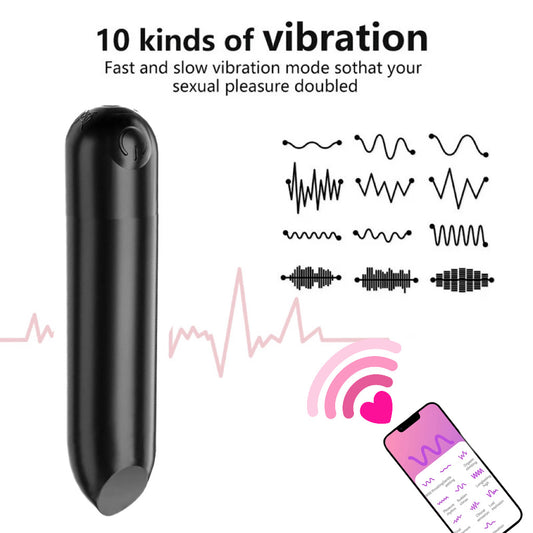
- Vary the instrument. Fingertips, fingernails, the back of your hand, a silk scarf, an ice cube, a vibrator on its lowest setting held against non-genital zones. Different textures recruit different receptors.
- Rate as you go. Mentally score each zone: nothing, pleasant, promising, wow. You're building a reference you'll use for years — and one you can eventually hand to a partner with GPS precision.
- Repeat across your cycle. Your map isn't fixed. Estrogen and progesterone shift sensitivity week to week, so a zone that scored "nothing" on day 25 deserves a retrial on day 14.
What the Map Is Actually For
Knowing your own sensory geography changes more than solo sessions. It makes arousal faster and deeper because you stop skipping the on-ramps. It makes partnered sex specific instead of hopeful — "a little higher, lighter, don't stop" beats polite silence every time. And it quietly rewrites your relationship with your own body: from a thing that's supposed to perform to a place worth getting to know.
Most women were handed a map with one landmark on it. Yours has a few dozen. Go find out which ones are real.
FAQ
What is the most sensitive part of a woman's body? The clitoral glans, by nerve density — roughly 10,000 nerve endings. But rated by individual women, zones like the nape of the neck, inner thighs, and nipples frequently score nearly as high, and rankings vary a lot from person to person.
Can women orgasm from non-genital stimulation? Some can. Nipple-only orgasms are documented in research, and brain imaging shows nipple stimulation activates the same sensory cortex region as genital touch. It's uncommon but entirely real.
Why do my sensitive spots change from week to week? Hormones. Estrogen peaks around ovulation and heightens overall sensitivity; the premenstrual phase often dulls it or makes some zones tender instead. Mapping across a full cycle gives you the true picture.
Do erogenous zones become less sensitive with age? Skin sensitivity gradually declines, and menopause reduces blood flow to genital tissue — but regular stimulation maintains responsiveness, and many women report better body awareness after 40 than at 25. Use tends to preserve the map.