
-
Alloy Extreme Anal Spreader- Speculum
Normaler Preis $44.99Normaler Preis -
BDSM Anal & Vaginal Speculum / Spreader
Normaler Preis $42.99Normaler Preis -
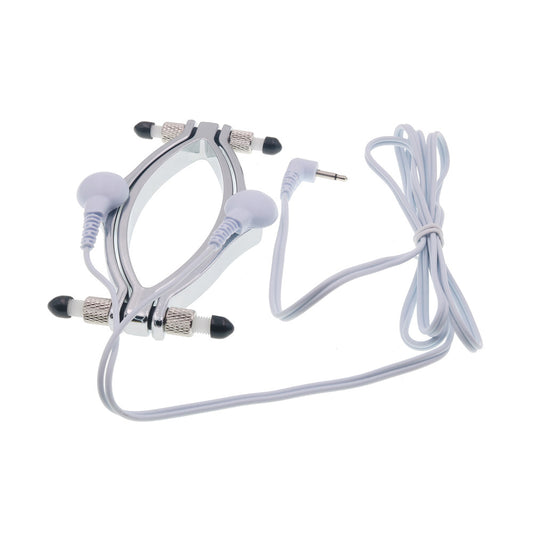
Electric Vaginal Speculum
Normaler Preis $29.99Normaler Preis -
Oculus Stainless Steel Speculums Anal Virginal Explorer
Normaler Preis $36.99Normaler Preis -
Resin Vulva Dilator Anal Vaginal Speculum
Normaler Preis $32.99Normaler Preis -
Medical Virginal Speculum
Normaler Preis $21.99Normaler Preis -
304 Stainless Steel Vaginal Speculum
Normaler Preis $25.99Normaler Preis -
Oculus Stainless Steel Anal Virginal Speculum
Normaler Preis $33.99Normaler Preis -
Virginal Dilator Speculum Sex Toy
Normaler Preis $22.99Normaler Preis -
Oculus Anal Virginal Speculum
Normaler Preis $33.99Normaler Preis -
LED Vaginal Speculum
Normaler Preis $24.99Normaler Preis -
BDSM Toy Vaginal Speculum
Normaler Preis $26.99Normaler Preis -
Medical Virginal Speculum
Normaler Preis $24.99Normaler Preis








Your vaginal speculum exam doesn't have to feel intimidating, even though vaginal speculums have remained largely unchanged for more than 170 years. Understanding what a speculum is used for, including Cusco and Graves vaginal speculum styles, can help you feel more in control during your visit. Knowing how a speculum works, why sizes and materials differ, and why your provider may choose a plastic or metal option can also make the process feel less daunting. This piece explains vaginal speculum use and comfort strategies, so you know what to expect throughout your exam.
What Is a Vaginal Speculum Used For?
A vaginal speculum is a simple mechanical tool that gently holds your vaginal walls apart so your clinician can see the vaginal canal and cervix without obstruction. Most types have two hinged arms that resemble a duck's bill. After insertion, the arms open and separate the vaginal walls by about one inch. This adjustment gives your provider a clear view to check for abnormal growths, collect samples, or perform procedures through the vagina. Some plastic specula also have a built-in light that helps the clinician see the cervix more clearly.
The standard design does have one limitation. Its blades separate the front and back vaginal walls, but they do not support the side walls. Those walls can collapse inward during an exam and block the clinician's view. This collapse can become serious enough to hide the cervix completely for some patients. The result may be more repositioning and discomfort. Rarely, an exam may need to take place in an operating room under general anesthesia.
At the time it is used for screening, symptoms, or treatment
Clinicians use a speculum in many situations beyond a routine checkup. During cervical cancer screening, it lets the doctor inspect the vagina and collect cervical cells for a Pap test or HPV test. Guidelines recommend starting Pap tests at age 21. Normal results may mean you only need another test every three years, while a normal HPV-only test may extend that interval to five years.
A pelvic exam with a speculum can also help diagnose yeast vulvovaginitis, bacterial vaginosis, lichen sclerosis, and fibroids. It can identify sexually transmitted infections such as gonorrhea, chlamydia, or herpes. An abnormal Pap or HPV result may require a colposcopy. During this exam, the speculum keeps the vaginal walls open so the clinician can inspect the cervix with a magnifying colposcope. An acetic acid solution often explains unusual areas on the cervix. Specula also support procedures such as biopsies, dilation and curettage, and loop electrosurgical excision.
A brief history: Early specula and Sims's experiments on enslaved women
The speculum is not a modern invention. Ancient Greece and Rome used versions carved from bone or wood long before stainless steel models existed. The design most familiar today traces back to James Marion Sims, a 19th-century doctor. He turned a bent spoon handle into a tool that allowed him to see inside the vagina while treating a patient during the 1840s. Sims refined the device through repeated surgeries on enslaved women. Anarcha endured the procedure 30 times, while Lucy and Betsey also underwent surgeries without anesthesia.
Later innovators changed the tool further. Edward Gabriel Cusco introduced a two-bladed speculum with a screw mechanism that held the blades open in 1870. Massachusetts doctor T.W. Graves later combined Sims's curved design with Cusco's bivalve structure. His work created the duckbilled speculum that became the medical standard. Screening rates have declined over the last several years. The share of women overdue for cervical cancer screening rose from 14% in 2005 to 23% in 2019.
Types of Vaginal Specula and How They Differ
Speculums differ in more than their simple shape. The material, blade width, and design can all affect your comfort during an exam.
Plastic and metal: Single-use and reusable tools
Your clinician's speculum is usually made of stainless steel, glass, or plastic, and each option has practical and environmental effects. An estimated 420 million disposable plastic specula were used worldwide in 2023, with North America accounting for 35% of use and Asia for another 30%. Metal speculums first appeared in the 1800s and remained the clinical standard until disposable plastic options emerged in the 1960s. Plastic tools are used once and discarded, but a sterilized metal speculum can be reused up to 500 times. This keeps its long-term carbon footprint lower despite the energy required for autoclaving.
One comfort study found that 93.4% to 98.5% of patients rated insertion as easy with metal, plastic, and biobased plastic speculums. The study found no statistically significant difference in size or ease of insertion among the three options. Temperature did matter, though. Biobased plastic felt most pleasant, while metal felt coolest. Regarding sanitation, 45.8% of patients believed plastic was cleaner, while 18.7% preferred metal and 33.5% saw no difference. A separate survey found that 83.3% of practitioners would switch to reusable metal specula if research showed they were more sustainable.
Graves and Pederson specula: Differences in blade width
| Feature | Pederson | Graves |
|---|---|---|
| Blade shape | Narrow, flat, straight | Wider, curved |
| Best suited for | Narrow vaginal canals, nulliparous or postmenopausal patients | Patients who've had vaginal deliveries, broader anatomy |
| Visualization | Focused, may need repositioning | Broader field, easier cervix access |
Both types come in small, medium, and large sizes. Your clinician usually starts with the narrowest option that still provides a clear view.
Cusco and Sims vaginal speculum uses
The Cusco speculum is self-retaining. Its screw mechanism holds the blades open, so no one needs to hold it in place. Clinicians often use it to perform routine Pap smears, colposcopy, and IUD follow-up. The Sims speculum works differently. Its single S-shaped blade retracts the posterior vaginal wall instead of opening on its own, so an assistant must hold it in place. This design gives deeper access to the vaginal walls than the Cusco speculum and is useful during cervical biopsies, D&C procedures, and vaginal surgeries.
Why the right size depends on your anatomy
Sizing options range from pediatric or small models, around 3" x 0.75", to medium models at 4" x 1.5". Large options measure about 4.5" x 1.5", while extra-large versions can reach 6" x 1.5". Newer slim models are closer to a tampon's width. Your provider considers your vaginal canal width and whether you've had vaginal deliveries. Your age and history of painful exams can also affect the size they choose. If a previous exam left you sore or anxious, mention it before the exam so your clinician can start with a smaller size and adjust lubrication as needed.
What Happens During a Speculum Exam?
Once your provider selects the right size and type, the exam follows a predictable sequence, from the tool's design to its insertion and removal.
Vaginal speculum parts: A simple diagram
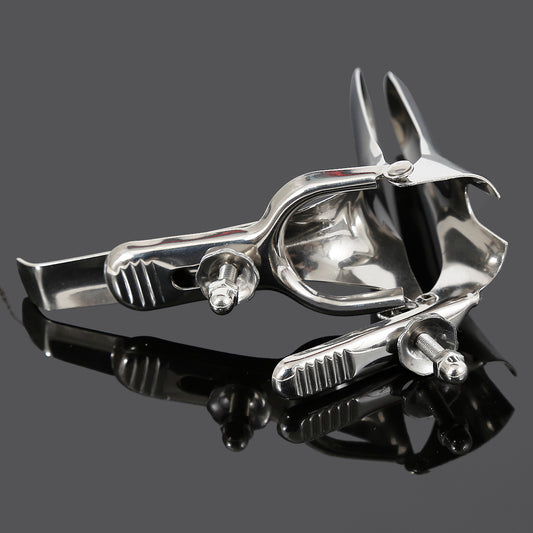
A standard bivalve speculum, such as the Cusco, has two duckbill-shaped blades. One supports your anterior vaginal wall, and the other supports the posterior wall. A hinge near the handle connects the blades. A screw or locking mechanism keeps the blades open after your clinician gets a clear view of your cervix, and a small groove along the body lets vaginal secretions drain during the exam.
The Sims speculum has a different design. It consists of one curved blade with a handle, a neck that connects them, and a rounded tip that helps prevent injury. Some Sims models have a fenestrated blade with an opening for biopsy instruments. Others have a solid blade for basic retraction.
How the clinician inserts, opens, and removes the speculum
Your clinician will explain each step before it happens. You can also ask to see the speculum beforehand so it does not feel unexpected. The process generally looks like this:
- You'll lie back in the lithotomy position with your knees bent and heels in stirrups. Your bladder should be empty before the exam begins.
- The clinician warms the speculum, often under warm water or by checking its temperature against their wrist.
- The clinician uses one hand to part the labia and inserts the closed speculum at a slight downward angle along your vagina's natural axis.
- The clinician opens the blades gradually until your cervix is clearly visible, then locks them in place with the screw mechanism.
- The clinician loosens the screw after the exam or sample collection. They allow the blades to close partway and remove the speculum with gentle traction.
Lubricant use depends on the test. Water-based lubricant is standard for a general exam, but clinicians often avoid it if they collect cytology or colposcopy samples because it can affect the results.
Cases where a cervical sample may be taken
If you're due for a Pap test or HPV test, your clinician collects cells from your cervix while the speculum holds your vaginal walls apart. A soft brush and a flat scraping tool called a spatula collect the sample. The clinician then places it in a liquid preservative and sends it to a lab for microscopic review. This step occurs just before the speculum is removed, which keeps the cervix visible throughout collection. Your clinician may also collect endocervical or high vaginal swabs to test for infection. They roll the swab against the cervix or vaginal wall in a sweeping motion before placing it in a transport tube.
How to Make a Speculum Exam More Comfortable
Knowing what to expect will not remove every bit of nervousness, but it gives you practical ways to make the exam fit your needs.
Discuss past pain, trauma, or concerns before the exam
Tell your provider about any history of painful exams, vaginismus, vulvodynia, or sexual trauma while you are dressed and seated. Sexual assault survivors have higher anxiety rates than the general population, and a pelvic exam can trigger PTSD-like symptoms. Even a general statement, such as "pelvic exams are difficult for me because of my history," gives your clinician a reason to slow down and adjust their approach. Let your provider know about conditions such as lichen sclerosus or vaginismus beforehand so they can use a gentler technique from the start.
Ask about lubricant, gentle warming, and position changes
A standard speculum is about 6.3 inches long, while the vaginal canal averages closer to 3.6 inches. Ask for the smallest size that still provides a clear view to reduce unnecessary pressure. Request a water-based lubricant without glycerin or parabens if you have sensitive skin or recurring infections. Your provider can warm the speculum under warm water rather than insert it cold, which may reduce muscle tension. You can also ask them to rest the closed speculum against your vagina briefly before opening it. This gives your body time to adjust to the sensation.
Agree on explanations, check-ins, and a stop signal
Ask your provider to explain each step just before it happens and request your permission before touching you. You can ask for a mirror to watch the exam or place your hand over your provider's hand to set the pace. Choose a simple stop signal beforehand, and remember that you can pause or end the exam at any point if you feel overwhelmed.
Use slow breathing or a support person to ease anxiety
The 4-7-8 method can help activate your parasympathetic nervous system and ease pelvic floor tension. Breathe in for four counts, hold your breath for seven, then exhale for eight. Diaphragmatic breathing can also help. Let only your belly rise as you breathe to relax muscles that may tighten around the speculum. Bring someone you trust, such as a friend or partner, for reassurance and support if needed.
Ask about pain relief when simple changes are not enough
Ask your provider about additional pain relief if breathing exercises and position changes do not help enough. Options may include a heating pad, over-the-counter pain medication, anti-anxiety medication, or numbing gel around the cervix. Some clinics also offer a paracervical block, an injection that numbs the cervix directly, when discomfort goes beyond a routine exam.
What to Expect After the Exam
Once the speculum is removed, your body may need a little time to settle. Knowing what's normal can help you tell the difference between routine recovery and a reason to call your provider.
Mild spotting after a cervical sample: What to expect
Light bleeding or spotting is common after a cervical sample because collecting cells involves a small scrape of your cervix. It usually clears within a few hours, but it may last up to two days as blood vessels near your cervix settle. Mild cramping can also occur, much like period cramps, and it should not last more than a few hours.
Severe pain, heavy bleeding, or fever: Seek care
Call your provider if you soak more than one pad an hour, if bleeding lasts longer than two weeks, or if you notice clots or bright red blood. Contact your provider for severe cramping, pelvic or belly pain, fever, chills, or foul-smelling discharge. These symptoms can signal an infection.
How results and follow-up plans are shared
Your provider may share physical exam findings right away, but Pap or HPV lab results can take up to three weeks. A normal result may mean you can wait three to five years before your next screening. Unclear or abnormal findings often require a repeat test or a colposcopy.
Conclusion
A vaginal speculum exam is a brief procedure that gives your provider a clear view of your cervix. Speculum sizes, materials, and techniques can vary, so you can tailor the exam to your comfort level.
You can request a smaller Pederson speculum or warmed lubricant, and you can agree on a stop signal before the exam. These small choices can make the visit much easier. Sharing details about past discomfort can also change how your exam goes.
This knowledge can help you arrive at your next appointment informed and prepared, with more control over the experience.