
-
-
-
-
-
Doctor Recommended Kegel Exerciser Vibrating Ben Wa Balls
Regular price $39.99Regular price$57.00Sale price $39.99Sale -
Cherry Kegel Balls - 5 Weighted Balls Per Set Ben Wa Balls
Regular price $49.99Regular price$65.00Sale price $49.99Sale -
Thigh Hip Trainer Kegel Exerciser Pelvic Floor Trainer for Postpartum Rehabilitation
Regular price $29.99Regular price$40.00Sale price $29.99Sale -


Remote Control Vibrating Kegel Balls Upgraded Prenatal and Postpartum Pelvic Floor Muscle Trainer
Regular price $66.99Regular price$86.00Sale price $66.99Sale -
-
Progressive Kegel Balls for Women Kegel Exercise Kit for Pelvic Floor Tightening
Regular price $45.99Regular price$57.00Sale price $45.99Sale -
Remote Vibrating Kegel Balls for Women
Regular price $48.99Regular price$63.00Sale price $48.99Sale -

 Sale
-

 Sale
-
Kegel Trainer Pelvic Floor Trainer for Postpartum Rehabilitation Thigh Toner Workout
Regular price $29.99Regular price$35.00Sale price $29.99Sale -

 Sale

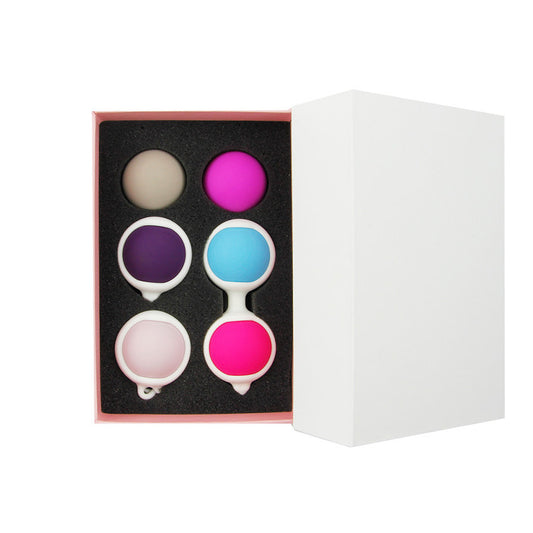










Kegel balls for women have become one of the most talked-about tools to strengthen the pelvic floor, and with good reason too. Your pelvic floor muscles do more than you may realize. They help you stop the flow of pee and prevent gas or stool leaks. People also call these devices Ben Wa balls or vaginal weights. They add resistance that can help strengthen the muscles that matter. Regular use may support bladder control and sexual function, which may improve your sex life. This piece explains what they are, how to use them, and whether they are right for you.
What Are Kegel Balls and How Do They Work?
Before you consider weighted devices, it helps to understand the exercise they support. Kegels involve contracting the pelvic floor muscles by squeezing, holding, then fully releasing them. The National Institute of Diabetes and Digestive and Kidney Diseases describes a simple routine: find the muscles, hold the squeeze for about 3 seconds, release completely, and gradually work toward 10 to 15 repetitions per session. Other medical sources recommend holding for 3 to 5 seconds and repeating the cycle 10 times, three times a day: morning, afternoon, and night. The technique may sound simple, but finding the right muscles can take practice.
How the pelvic floor supports your bladder, bowels, and uterus
These muscles form a hammock that runs from the front to the back of your pelvis. They do more work than many people realize. They keep your bladder, rectum, and uterus in place, which lets you control the release of urine, stool, and gas at the right times. Pregnancy, childbirth, surgery, and aging can weaken this muscle group over time. Once that happens, small leaks of urine, stool, or gas may occur during everyday activities.
Ben Wa balls, vaginal weights, and geisha balls: how the names are used
Kegel balls have several names, including Ben Wa balls, love balls, orgasm balls, vaginal balls, and geisha balls. They all refer to the same type of device. Their history traces back to ancient Japanese culture, and some reports date their use to as early as 500 AD. The traditional Japanese name, Rin-no-tama or Ben-wa, translates to "ringing bells". Western medicine became interested in the practice during the 1940s. Dr. Arnold Kegel observed women from a South African tribe using natural materials like nuts to train their pelvic muscles after childbirth. He noted that incontinence was rare among them. That observation influenced the pelvic floor training that now bears his name.
Modern versions come in metal, plastic, silicone, or glass. Many include a nylon or silicone cord to make removal easier. Whatever the package label says, these products fall into the same category: weighted spheres made for vaginal insertion.
How added weight challenges pelvic floor muscles
Here's where the "weight" part comes into play. When you insert a ball or cone, your pelvic floor muscles contract around it to keep it in place. That resistance helps strengthen the muscles. Vaginal cones work the same way: you insert the weighted cone and contract your muscles so it does not slip out while you stand or walk. A Cochrane review confirms that cone-shaped weights require continuous contraction to stop them from sliding out during use.
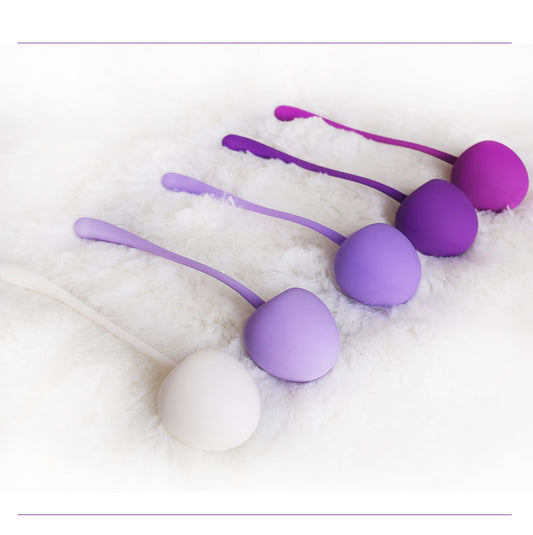
Most sets include several pieces that are roughly marble-sized. The weights range from light to heavy, so you can increase resistance as you build strength. You'll typically:
- Insert the lightest weight first and see whether you can hold it in place comfortably.
- Move up to a heavier weight once the current one becomes easy to maintain.
- Repeat the process as your pelvic floor adapts and grows stronger.
This progressive loading works much like adding resistance to any strength-training routine, except the muscle group is one you cannot see.
Kegel Balls for Women: Benefits and Limits
Weighted devices and traditional Kegels often get grouped together, but research shows a few differences worth knowing before adding resistance to your routine.
Kegel exercises for bladder control: where weights may help
A Cochrane review of 23 trials with 1,806 women, including 717 who used weighted vaginal cones, found that cones worked better than no treatment for stress urinary incontinence. The failure-to-cure rate ratio was 0.84. Comparisons with pelvic floor muscle training without weights or electrical stimulation showed a smaller difference that was not statistically clear.
A separate randomized trial with 60 women found that 53% of those who did standard pelvic floor exercises called themselves cured or improved, compared with 57% in the cone group. Nearly half of the cone users dropped out early. Weights may help, but some women find them uncomfortable or difficult to use consistently.
Possible effects on sexual function and your sex life
A 16-week trial that used vaginal spheres with pelvic floor exercises found meaningful improvements in sexual desire, arousal, and lubrication scores compared with baseline. Desire scores rose by a lot more in the spheres group than in the exercise-only group by week 16. Overall sexual function scores showed no meaningful difference between the groups.
Women who used the spheres followed their routine more consistently. Physical feedback may have made the exercises feel less repetitive. Separate research that measured pelvic floor strength with a perineometer found a statistically significant, though modest, link between muscle strength and sexual function scores.
Why strength is not the same as vaginal tightness
Strength and tightness are not interchangeable. A pelvic floor that can contract and relax on command functions well, while one that remains tense can cause pain during penetration instead of pleasure. Vaginismus makes this distinction clear. The muscles tighten involuntarily, not because they are weak but because of an overactive protective response.
Resistance training will not fix a muscle that is already too tight. Relaxation work matters more than squeezing in that situation.
What pelvic floor training may do for prolapse symptoms
Pelvic floor muscle training may help with pelvic organ prolapse symptoms directly. A trial of 287 women aged 55 and older with mild prolapse found that the pelvic floor training group improved by an average of 9.1 more points on a symptom-distress scale than the watchful-waiting group. Fifty-seven percent reported overall symptom improvement, compared with 13% in the watchful-waiting group.
The difference between groups fell below the level researchers consider clinically meaningful.
What research says about weights versus Kegels alone
The available evidence shows that weighted devices rarely work better than standard Kegels without equipment. The Cochrane review found that cones were similar to pelvic floor muscle training alone. The Enna Balls trial also showed similar strength gains on the Oxford Grading Scale: 1.14 points versus 1.16 points.
Dropout concerns in cone studies have made some researchers hesitant to recommend them over standard exercises.
Are Kegel Balls Right for You?
Figure out what your pelvic floor needs before you reach for a box of weighted balls. Pelvic floor problems can result from muscles that are stretched or weakened, but overly tight muscles that cannot relax can cause them as well.
Weak versus tight pelvic floor muscles: why symptoms need assessment
A weak pelvic floor often causes stress incontinence, which means leaking urine if you cough, sneeze, laugh, jump, or run. It may also cause a feeling of pelvic organ prolapse. A tight, overactive pelvic floor causes nearly opposite symptoms. The muscles may not relax enough to let you urinate or fully pass a bowel movement. Frequent bathroom trips, straining, changing positions on the toilet, and constipation can all signal a problem. Experts estimate that up to half of people with long-term constipation also have some type of pelvic floor dysfunction. Traumatic injury, muscle overuse, prior pelvic surgery, pregnancy and childbirth, aging, stress, anxiety, and connective tissue disorders may contribute to this dysfunction. A provider typically checks for spasms, knots, and weakness during a physical exam. Biofeedback training with physical therapy helps more than three-quarters of people with pelvic floor dysfunction regain better muscle control. Your symptoms need a proper assessment rather than a guess before you use any weighted device.
Times to avoid weights: pelvic pain, infection, or trouble relaxing
People with an overactive pelvic floor may feel worse if they add resistance. Pain during penetration, including pelvic exams or sexual intimacy, often signals this hypertonic pattern. Conditions such as painful bladder syndrome, interstitial cystitis, vulvodynia, vestibulodynia, vaginismus, dyspareunia, urinary urgency or frequency, endometriosis, and constipation require caution before you begin any Kegel routine, whether weighted or not. Kegel balls also carry general exercise-related risks, such as overexertion, tearing, and pain. Avoid stopping your urine stream to practice contractions. Regularly doing this can increase your risk of a bladder infection, so use it only as an occasional check rather than a routine practice.
Pregnancy, postpartum recovery, pelvic surgery, and IUD concerns
Pregnancy does not rule out pelvic floor exercises, but postpartum recovery changes the timeline. Wait six weeks after birth before resuming pelvic floor exercises if you had a forceps or vacuum delivery. Heavy weights and high-impact movement increase the chance of prolapse during recovery. Pregnancy hormones can also affect your joints and ligaments for up to six months after delivery, which raises your risk of injury. Patients should avoid placing anything in the vagina after pelvic surgery, including tampons, intercourse, or a Kegel device, for six weeks or until their doctor clears them. IUD users should also think twice before using a vaginal weight. Removing the device could pull the IUD out with it.
How to Choose Kegel Weights for Beginners
The right Kegel exercise balls for women depend on size and weight, not a brand's reputation or its packaging.
Choosing a comfortable size and light starting weight
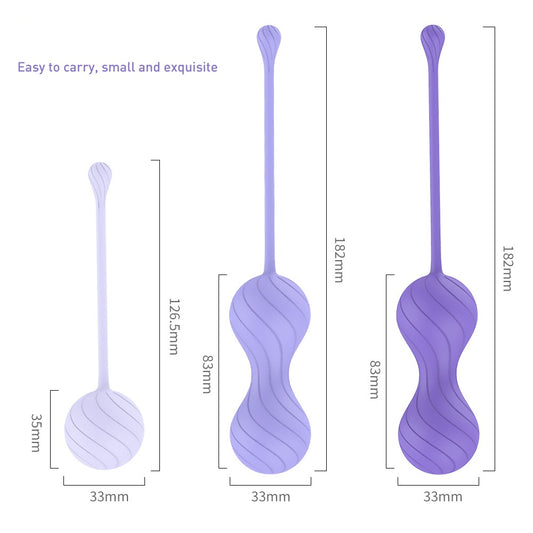
Most Kegel balls measure about 30 to 35 mm across, although sizes differ by brand. If this is your first time using one, choose a larger, lighter device instead of a small, heavy one. Larger balls are often easier to feel and keep in place, while smaller ones require more pelvic floor control right away. Start with your set's lightest weight and use the first few sessions as a trial run. Move to the next weight the following day if you can hold it comfortably for 15 to 20 minutes. Straining or clenching nonstop to keep it in place means you should move back down. The goal is a secure, comfortable fit, not pain or constant maximum effort.
Body-safe materials and a removal loop
Choose medical-grade silicone or body-safe plastic. Both materials are easy to clean and resist bacteria. Products with FDA approval deserve priority because their effectiveness to address incontinence has been tested. Avoid porous materials. Jade eggs, to name just one example, became popular for pelvic floor exercises but caused infections because their porous surfaces are almost impossible to disinfect fully. A smooth, nonporous surface with a retrieval cord or loop makes insertion and removal easier. Avoid anything cracked, rough, or visibly worn. Silicone devices also need water-based lubricant, since silicone-based lubricant breaks down the material over time.
Vibrating Kegel balls versus biofeedback trainers: what each offers
Standard weights use passive resistance, while some devices vibrate to provide extra sensory feedback. Biofeedback trainers such as Elvie or Perifit insert in a similar way but connect to an app. The app measures contraction strength and identifies mistakes, such as bearing down instead of lifting. These devices do not always build strength faster, but they may help you stay motivated and consistent. Elvie and Perifit are both IUD-safe. A gadget can cost up to $300, so think about whether tracking and games will help you practice or whether charging and washing the device will become another reason to skip it.
Where to buy and which product claims to question
You can find Kegel weights at sex toy shops, pharmacies, and online retailers. Choose sellers that disclose their materials and manufacturing standards. Be cautious of marketing that promises the "fastest" results or guaranteed cures. Weighted devices often work about as well as standard Kegels done without equipment.
How to Use Kegel Balls Safely, Step by Step
Once you've chosen kegel balls for women, your technique matters as much as the weight.
Find the right muscles, then practice lifting and releasing without weights
Start without a ball inside. Squeeze the muscles you would use to stop gas or pause urine flow, then release them fully. Practice this lift-and-release pattern until it feels natural before adding resistance.
Clean the device and insert it gently with suitable lubricant
Wash your hands and the balls with warm water and antibacterial soap, then dry them really well. Apply water-based lubricant to the balls and your vaginal opening. Insert the balls slowly while lying down.
Keep practice sessions short and rest between them
Use the balls for 15 to 20 minutes per session instead of wearing them for hours. Squeeze for about 5 seconds, then rest for 5 seconds. Repeat this for up to 3 sets a day. Avoid walking around with them for more than a couple of hours, even after you build strength.
Remove the balls gently and get help if they will not come out
Lie down, add lubricant, and pull the removal string slowly. Squat and push as if you are having a bowel movement if the balls will not budge. Coughing or light jumping may also help. See a doctor if they still will not come out.
Clean and dry the balls before storing them as directed
Rinse the balls with antibacterial soap, pat them dry, and let them air-dry before storing them in their case.
Monitor comfort and bladder symptoms before adding time or weight
You may notice changes within 6 to 8 weeks. Stop using the balls and consult a provider if you have severe pain, unusual discharge, or odor.
Conclusion
Kegel balls can help strengthen the pelvic floor, but they work best when they match your body's needs. Weak and tight muscles can cause very different symptoms, so it is worth checking with a provider before you begin. After you confirm that weighted training is right for you, choose a comfortable size, a body-safe material, and a sensible starting weight.
Research shows that these devices work about as well as standard Kegels without equipment. The real benefit comes from consistent practice, proper technique, and paying attention to your body rather than relying on the device itself. Take your time with the practice, and you may notice steady improvement within a couple of months.