
-
BDSM Leather Handcuffs with Waist Harness
Regular price $24.99Regular price$34.00Sale price $24.99Sale -
Faux Leather Body Harness Lingerie Set with Handcuffs – Adjustable Punk Garter Belt Outfit for Women, Festival & Roleplay Wear
Regular price $25.99Regular price$29.00Sale price $25.99Sale -
Punk Leather Body Harness for Women – Adjustable Chain Belt Lingerie for Festival, Clubwear & Bedroom
Regular price $35.99Regular price$42.00Sale price $35.99Sale -
ObeyMe Faux Leather Bondage Harness
Regular price $24.99Regular price$27.00Sale price $24.99Sale -
BDSM Leather Handcuffs with Doggy Style Waist Harness
Regular price $21.99Regular price$31.00Sale price $21.99Sale -
Locked & Loaded Faux Leather Babydoll – Fetish Bondage Lingerie with Harness
Regular price $18.99Regular price$21.00Sale price $18.99Sale -
Leather Roleplay Lingerie Set with Top, Bottoms & Cuffs – BDSM-Inspired Outfit for Women
Regular price $35.99Regular price$43.00Sale price $35.99Sale -
Leather Full Body Harness Set Black & Cuffs Luxury
Regular price $34.99Regular price$39.00Sale price $34.99Sale -
Women's Faux Leather Low Rise Mini Shorts – Sexy Clubwear Bottoms for Party
Regular price $21.99Regular price$21.99Sale price $21.99 -
Zipper Crotch Patent Leather Briefs – Sexy Low-Rise Lingerie for Women
Regular price $21.99Regular price$36.00Sale price $21.99Sale -
Black Long Sleeve Bodysuit Crotchless Womens Leather Lingerie Slutty Teddy
Regular price $28.99Regular price$36.00Sale price $28.99Sale -
Women's One-Piece Wet Look Faux Leather Lingerie / Mesh Splice Zipper Crotch Bodysuit
Regular price $29.99Regular price$37.00Sale price $29.99Sale -


Sexy Faux Leather Long Sleeve Romper with Deep V Neck & Open Crotch | Zip-Up Bodysuit for Women
Regular price $24.99Regular price$30.00Sale price $24.99Sale -
PU Leather Straitjacket Restraint Bondage Fetish Harness
Regular price $42.99Regular price$61.00Sale price $42.99Sale -
Bdsm Leather Handcuffs And Leg Cuffs with Doggy Style Harness
Regular price $53.99Regular price$77.00Sale price $53.99Sale -
BDSM Leather Handcuffs with Waist Harness for Doggy Style
Regular price $37.99Regular price$54.00Sale price $37.99Sale -
Men's Leather Body Harness Set with Suspenders & Leash – Adjustable BDSM Chest Harness for Roleplay & Fashion Statem
Regular price $25.99Regular price$31.00Sale price $25.99Sale -
English Bull Dog Leather Chest Harness Sexy Men Lingerie
Regular price $32.99Regular price$37.00Sale price $32.99Sale


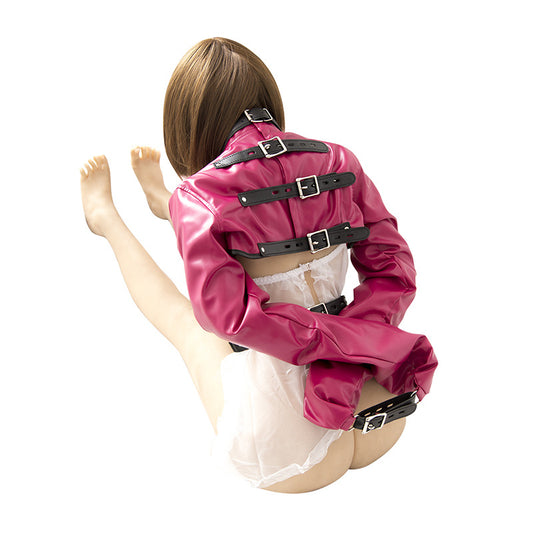

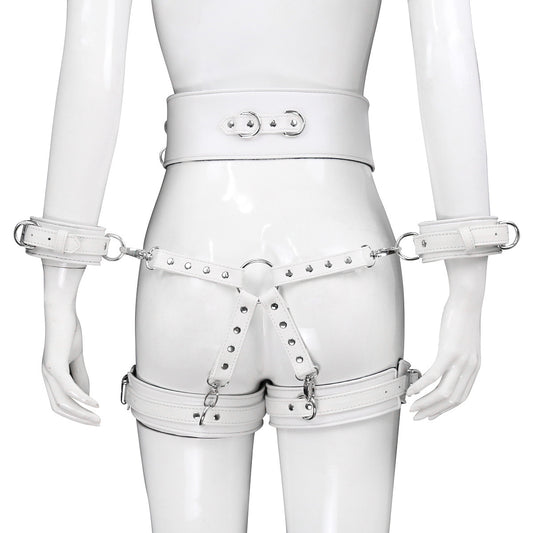

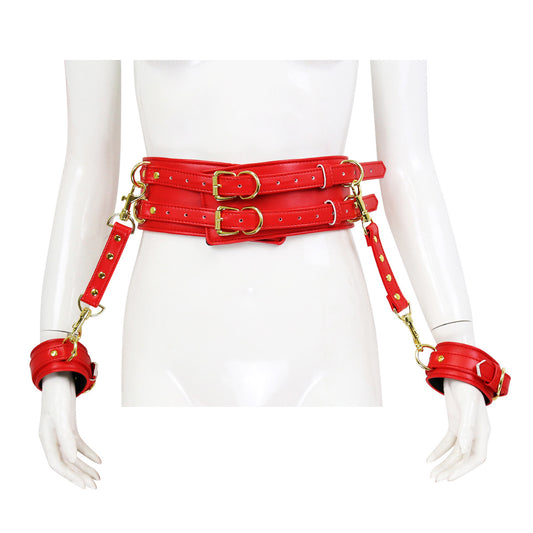


A leather harness that women choose today does more than accessorize. It changes how an outfit looks and turns a simple top or dress into a styled statement. Bodysuits and lingerie now appear openly as outerwear, and this piece has shifted from a subculture staple to a wardrobe essential. Options include a leather body harness, a handmade leather harness, and full-body leather harness styles for women, with sizes from XS to 6X and prices starting at about USD 100. This piece explains how to choose and wear a leather harness set that suits your shape and style, then care for it.
What Is a Women's Leather Harness?
A harness earns its place in a wardrobe by doing what plain fabric cannot: it creates structure around the body and improves posture instead of simply covering it. Worn over a tee, leather straps create a considered architectural look that turns a flat silhouette into one with defined lines. The base layer can change the piece's whole personality. A plain black tee keeps the look grounded, while mesh or a bodysuit gives it a clubwear feel. Bare skin makes the straps the outfit's boldest detail.
Chest, waist, and leather bra harness styles
The chest harness remains the most popular and versatile starting point because it frames the upper body and works over bare skin or layered clothing. A leather bra harness goes further by framing the bust with straps. It often combines a choker with a chest frame, which makes it suitable as a visible layer over clothing or beneath it. Women seeking a breast harness with less coverage can choose open-cup or cupless designs. These styles outline the bust rather than conceal it, so the layer underneath provides coverage. A waist harness sits lower and works somewhere between a belt and corset. It adds shape and tension around the hips without requiring a full chest rig. A smaller choker harness anchors at the neck and extends onto the chest, which makes it an affordable and simple introduction to the category.
Leather garter harnesses and full body designs
A leather garter harness wraps around the thigh as a single strap or a multi-strap design. It pairs well with skirts, shorts, or thigh-high boots. Full body leather harness women styles connect the chest and waist, sometimes extending to the legs in one continuous strap system. They cover more of the torso and offer a strong visual effect, while some designs also have practical uses. These pieces often use leather weighing around 5 to 6 oz and come in black, brown, red, or pink finishes. Quality hardware matters with these designs. Metal fittings on a well-made leather body harness can support loads of up to 90 kg, which shows how securely the straps should sit against the body.
Fashion harnesses vs. BDSM harnesses
A fashion harness is lighter and focused on styling. It can sharpen the look of a shirt, jacket, or dress without serving a functional bondage purpose. A leather BDSM harness, by contrast, is made for use. Its construction supports roleplay, restraint, or intimate play rather than appearance alone. The two categories may look similar from across a room, which is where confusion often begins. Rings, buckles, and connectors on a fashion piece are often decorative rather than load-bearing. A sexy harness bought for a night out should not be treated as suspension-rated gear unless the maker states this clearly. The design's stated purpose matters more than the hardware's appearance. That distinction prevents a women's bondage harness from being confused with a decorative leather fashion harness.
How to Choose a Leather Harness That Fits
Finding the right leather harness for women involves more than choosing an attractive design. Leather quality, construction, hardware, and sizing all influence how a harness looks, feels, and performs. Whether you prefer a delicate everyday accessory or a bold statement piece, understanding these details can help you find a comfortable and well-made option.
Leather Quality, Finished Edges, and Durable Hardware
The type of leather used in a harness affects its appearance, flexibility, and durability. Different leather grades offer different characteristics:
-
Full-Grain Leather: Made from the outermost layer of the hide, full-grain leather retains its natural grain and markings. It can develop a distinctive patina over time and is valued for its durability.
-
Top-Grain Leather: The surface is refined to create a smoother, more uniform appearance. It offers a balance between quality, flexibility, and aesthetics.
-
Genuine Leather: A broad commercial category that can include different leather grades and processing methods. Check the product description carefully rather than relying on the label alone.
-
Bonded Leather: Made from leather fibers and scraps combined with binding materials. It generally offers less durability than higher-quality leather and may deteriorate with repeated use.
Construction is just as important as the material itself. Look for smooth edges, securely attached buckles, and reinforced connection points where straps meet metal rings. Metal hardware generally provides a more substantial finish than plastic alternatives.
Pay attention to edge finishing, too. Burnished edges create a polished appearance, while edge paint provides a sealed, uniform finish. These small details can make a noticeable difference in the overall quality of a leather harness.
Choosing a Handmade Leather Harness
A handmade leather harness can be an excellent choice if you value craftsmanship and individual fit. Unlike mass-produced designs, handcrafted pieces may offer more flexibility in strap placement, measurements, leather selection, and hardware finishes.
One detail worth checking is the stitching method. Traditional saddle stitching uses two needles and a continuous thread, creating a strong seam in which individual stitches remain secured even if one section becomes damaged.
When considering a handmade design, ask about the leather grade, stitching technique, hardware composition, and available customization options. These details provide a clearer picture of how the harness is constructed and whether it meets your expectations.
Measuring Your Chest, Waist, and Shoulders
Accurate measurements are essential for a comfortable fit. Before ordering a leather harness, check which body measurements the specific design requires.
Common measurements include:
-
Chest: Measure around the fullest part of your chest, keeping the measuring tape level.
-
Waist: Measure around your natural waist, usually the narrowest part of your torso.
-
Shoulders: Some designs require shoulder measurements to determine strap placement and overall balance.
-
Hips: Lower-body harness designs may require hip measurements for a secure fit.
Use a flexible measuring tape and keep it comfortably snug without pulling it tight. Measure over bare skin or thin clothing, depending on how you intend to wear the harness.
Also consider your preferred styling. A close-fitting harness creates a more structured appearance, while a slightly relaxed fit may work better when layering over clothing. Always compare your measurements with the seller's size chart rather than relying solely on your usual clothing size.
Plus-Size Options and Adjustable Straps
A well-designed plus-size leather harness should offer more than simply longer straps. Proper proportions, comfortable strap placement, and sufficient adjustment points all contribute to a better fit.
When shopping for inclusive sizing, look for:
-
Extended size ranges that accommodate different body proportions.
-
Adjustable buckles or strap sliders for a more personalized fit.
-
Custom measurement options for sizes outside standard charts.
-
Clearly stated maximum and minimum strap lengths.
-
Additional adjustment options around the chest, waist, or shoulders.
Adjustable straps are particularly useful because they allow small fit changes after delivery. If you need a made-to-measure harness, contact the seller before ordering to confirm which measurements are required and whether customization affects the return policy.
Checking Prices, Size Charts, and Return Policies
Leather harness prices vary depending on material quality, craftsmanship, hardware, and customization. Understanding the differences between price categories can help you set realistic expectations.
-
Entry-Level Designs: Typically use synthetic leather or simpler construction and are suitable for shoppers looking for a more affordable fashion accessory.
-
Mid-Range Harnesses: May feature genuine or top-grain leather, better hardware, and more detailed construction.
-
Premium Leather Harnesses: Often use higher-quality leather, reinforced stitching, and more substantial hardware.
-
Custom Handmade Pieces: Usually cost more because of individual measurements, specialized craftsmanship, and personalized design choices.
Rather than judging quality by price alone, compare the leather specifications, stitching, hardware, and adjustment options.
Before placing an order, review the size chart and return conditions carefully. Custom-made products may have stricter cancellation and return policies than standard-size items. Check whether alterations are included in the price, how long production takes, and whether exchanges are available if the fit isn't right.
Ultimately, the best leather harness combines quality materials, thoughtful construction, and a fit that complements your body. Taking time to compare these details will help you choose a design that feels comfortable, looks distinctive, and suits your personal style.
How to Wear a Leather Harness with Everyday Clothes
Putting a leather control women's outfit together for everyday wear means treating the straps as another layer, much like a belt or jacket, instead of something reserved for a special occasion.
Add shape to a loose T-shirt and jeans
A plain fitted tee creates a clean backdrop for the straps. Its solid color and simple neckline keep the leather from competing with the rest of the outfit. Keep the colors tonal: wear a black control over a black or white tee, or pair a washed-gray control with charcoal. This draws attention to the hardware instead of color blocking. Tuck the tee into high-waisted trousers or straight dark-wash jeans, then add boots. The outfit looks complete with little effort. Cities such as Berlin, Copenhagen, and Paris treat this combination of a chest control, simple top, and jeans as everyday wear rather than a look for a night out. Choose straight or wide-leg dark denim, and avoid printed tops or heavily distressed jeans because they compete with the control. Pairing a chest control with a fitted shirt and cargo jeans keeps the look relaxed. Flared blue jeans, a plain black tee, and a long leather coat give the same formula a rock-inspired feel.
Layer a control over a shirt or blouse
A crisp white shirt makes a versatile base for a leather women's control. Tuck it into jeans, leave one or two top buttons open, place the chest control along the collarbone, and roll the sleeves to balance the proportions. Hardware changes the overall feel. Gold looks warm and editorial against white cotton, while silver feels cooler and more minimal. A black turtleneck offers a darker option and lets the straps and hardware stand out against a clean base. Keep this look monochromatic with black jeans or dark trousers. A hip control uses straps around the waist and hips instead of shoulder straps, so it can replace a belt over a tucked shirt. A chest control worn at the waist will not sit the same way.
Pair a simple waist control with a casual dress
A control over a dress reshapes the silhouette and adds structure to a simple slip. Choose silk, satin, or matte jersey in black, charcoal, dusty nude, or forest green. Let the chest control rest across the shoulders, especially with a midi hem. A colored leather control over a flowing dress creates a softer, bohemian look for daytime. A waist-focused design works like a structured belt. Wear it over a dress, long shirt, or fitted knit to create a visible waist break, while wider pieces add stronger definition.
How to Create Bold Leather Harness Looks
Bold styling treats the control as the focal point rather than a supporting layer. The same straps that work over a tee or blouse can create far more drama when you change the pieces around them.
Style a chest control with a tailored suit
Tailoring gives a women's leather control look an editorial edge. A blazer already creates strong shoulder lines, so a control worn on top should mirror that structure instead of competing with it. A single horizontal strap or minimal Y-shape across the chest works better than a busy design. It frames the lapels without crowding them. Try a double-breasted blazer worn open with the control placed neatly on top and wide trousers below to create a confident, gender-fluid silhouette. The same piece can read as outerwear jewelry over a structured wool coat, making an unexpected yet intentional choice. A chest control over a chunky blazer gives the outfit a tailored feel it would not otherwise have.
Pair a full-body leather control with a plain bodysuit
Sometimes the control is the outfit. A full-body leather control worn over bare skin, a bralette, or a thin slip becomes the sculptural focus of the look. A bodysuit makes an ideal base because no waist gap causes the straps to bunch. A full-body control over high-waisted leather trousers with pulled-back hair and a bold lip creates a complete, decisive look on its own. Keep the styling restrained. Skip layered necklaces and competing textures, and let the leather lines lead. A full-body or chest control over a sheer bodysuit also suits strict dress-code venues such as KitKat Club Berlin. Hardware quality matters there because the lighting reveals cheap materials at once.
Wear leather control lingerie under a sheer layer
A sheer top changes the feel of leather control lingerie. Straps over cotton feel structural, while straps over mesh or chiffon feel sensual. The leather and visible skin become part of one composition. The same approach works with sheer or open-back dresses. A control worn beneath the fabric shows through, while a back-crossing design frames an open back instead of disappearing beneath it. Keep the hardware minimal because the layered effect already carries the look. High-waisted briefs work well underneath and add to the outfit without distracting from it.
Build a matching leather control set for a night out
A coordinated leather control set takes the guesswork out of a multi-part look because every piece is designed to work together. Before a club night, wear the control over a blazer so it reads as fashion at dinner. Remove the blazer afterward and let the control become the top. Match gold or silver hardware with your other metal accessories. Mixing finishes can look unplanned. Save chain details to clubs and evening settings rather than layering them over busy daywear. At festivals, pair a chest control with a leather cuff and sturdy leather control boots that women can move in to create a cohesive, maximal statement.
How to Care for Your Leather Harness
Women who invest in a leather harness can keep it looking sharp with a short routine after each wear instead of relying on an occasional deep clean.
Clean and condition it according to the leather finish
Full-grain, vegetable-tanned leather reacts to moisture. Wipe it with a dry cloth as soon as it gets wet, then let it air-dry at room temperature instead of using a hairdryer or radiator. A soft cotton cloth removes daily dust and body oils. Tougher marks may require a cleaner made for aniline or vegetable-tanned leather, but test it on a hidden area first. Some owners use saddle soap with a wooden brush and damp cotton cloth, then apply leather conditioner after the piece dries. Condition the leather every three to six months or whenever it feels dry. Choose products carefully for lighter shades, such as pink, so the color does not change.
Dry, store, and check straps and buckles between wears
Blot liquid stains instead of rubbing them in. Keep the harness away from direct sunlight and hang it instead of folding it, as leather retains a “shape memory” and can crease when left balled up. Check the straps, rivets, and buckles for looseness between wears. Polish the metal hardware to prevent tarnishing.
Conclusion
A well-styled leather piece becomes more than an accessory. It can change your posture, define your silhouette, and set the tone for the whole outfit. Quality details, such as full-grain leather and welded rings, show whether a piece will last for years or fall apart after a few months, so inspect the construction before you look at the price.
Tonal essentials work well for everyday wear, while tailored blazers add an editorial finish. Sheer layers create sensual drama, and coordinated sets suit a night out. Care is simple: wipe it with a dry cloth and condition it occasionally. Proper storage also helps preserve its shape and finish. The right fit, finish, and styling can turn this piece from a passing trend into a wardrobe staple you'll wear again and again.