
-
Small Realistic Clear 6 inch Cute Dildo with Suction Cup Dildo
Normaler Preis Von $22.99Normaler Preis -
Small Realistic Dildo with Powerful Suction Cup
Normaler Preis Von $13.99Normaler Preis



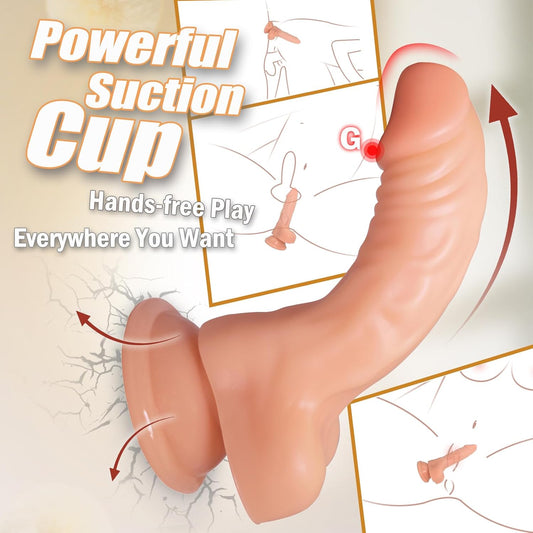
Small dildos typically measure 3 to 4.5 inches in insertable length and 1 to 1.25 inches in diameter. These dimensions prioritize comfort and control rather than intimidation. Many models measure 3 to 5 inches and provide a gentle introduction to penetration without overwhelming sensations.
These compact and slim dildos are not only for beginners. People often choose them for comfort, precision, and ease of use. If you are learning about vaginal or anal play for the first time, beginner-friendly dildos made from body-safe silicone can help you move at your own pace. This piece covers sizing, materials, and safety practices so you can choose with confidence and comfort.
What Makes Small Dildos Beginner-Friendly?
Terms such as mini, petite, and slim often get used interchangeably, but each describes slightly different proportions. A mini dildo usually has minimal length and girth, while a petite dildo focuses on a smaller overall scale without losing shape detail. Slim dildos prioritize a narrow diameter, sometimes under 1.25 inches, while maintaining a more standard length for full insertion. Studies of commercially sold dildos and vibrators show that typical products measure 4 to 6 inches long and 4 to 5 inches in circumference. True beginner sizes sit well below that average.
Why do smaller sizes offer more comfort and control? A slimmer shaft places less pressure on sensitive tissue, so insertion can feel smoother and cause less discomfort during the first few tries. A compact toy also gives you more control over the angle and depth because it responds more predictably to small hand movements than a larger toy. This can help while you learn how your body responds to touch and pressure, since smaller toys let you explore at a pace that does not overwhelm your senses. One useful guide is the number of fingers you can insert without strain. Match that level of girth when choosing a toy.
Choosing small is not only for beginners. People dealing with vaginismus, vaginal dryness, or surgical scar tissue may find a smaller toy more satisfying when they use plenty of lubricant, whatever their experience level. Texture matters too. Even soft silicone does not feel exactly like skin, and a slimmer profile can make that adjustment easier for anyone sensitive to unfamiliar sensations.
Small dildos also have practical benefits. They are easier to store and carry, which makes them a discreet option for travel or shared living spaces. They often cost less than larger alternatives, and their smaller surface area makes cleaning quicker. The trade-off is straightforward: you may give up some penetration depth and vibration intensity for easier handling. That trade works well for many people. Choosing smaller does not mean settling. It means choosing what fits your needs.
How to Choose a Dildo That Fits Your Needs
Picking the right size starts with understanding what the numbers in a product listing mean.
Insertable length vs. total length
A toy advertised as 10 inches often refers to its total length, measured from the tip to the base, rather than the part you can actually use. Insertable length measures from the tip to where the shaft meets the base. That same 10-inch toy may provide only 6 to 8 usable inches. Beginners often do well with 4 to 6 inches of insertable length, which provides targeted stimulation without requiring much experience. Many listings show total length because it looks better in photos, so subtract 2 to 5 cm to estimate the usable portion.
Diameter vs. circumference: understanding width
Diameter measures straight across the widest point, while circumference measures the distance around it. Multiply the diameter by pi (3.14) to find the circumference. A 4 cm diameter, for example, equals about 12.6 cm around. Anything under 3 cm in diameter is slim and beginner-friendly, while 3 to 4.5 cm falls within the average range for mainstream products. A beginner-friendly diameter usually falls between 2.5 and 3.5 cm.
Body-safe silicone dildos and other nonporous materials
Platinum-cured silicone is non-porous, hypoallergenic, and phthalate-free. It can also withstand boiling for sterilization. Borosilicate glass and surgical stainless steel are body-safe alternatives, although their rigidity can make the same diameter feel larger.
How shape, texture, and firmness affect comfort
A tapered tip helps your body adjust gradually rather than all at once. Texture can make a toy feel thicker, so beginners often prefer smooth shafts. Soft to medium firmness is usually the most forgiving option for first-time use.
Secure bases for anal use and harness fit for partner use
Any toy made for anal use needs a flared base that is wider than the shaft because muscles can pull an unflared toy inward. Harness O-rings for partner play typically fit dildos between 1.1 and 2.25 inches in diameter.
Getting Started Safely and Without Pressure
Getting comfortable with a new toy begins well before insertion. A few simple habits can make the process safer and nowhere near as stressful.
Check and clean your toy before use
Check the surface before using a toy for the first time. Run your fingers over it to look for nicks, cracks, or rough seams. Damaged material is harder to clean and may irritate your skin. Wash the toy with warm water and mild soap, then let it dry completely in the air. Body-safe silicone dildos can be boiled for 5 to 10 minutes to sanitize them fully, but only if they do not contain batteries or vibrating parts.
Choose a compatible lubricant
Lube is part of the setup, not an optional extra. Water-based lubricant works with every toy material, including silicone, glass, and metal. It also washes away easily with soap and water. Keep silicone-based lube away from silicone toys because it can bond to the surface at a molecular level. That damage can leave the toy rough and more likely to trap bacteria over time. Start with a dime-sized amount, then apply more if friction builds. Anal play calls for a thicker gel formula and frequent reapplication because that tissue does not produce its own lubrication.
Set boundaries and take your time
There is no need to rush. Go slowly and communicate about what feels good, whether you are alone or with a partner. Pause whenever something feels uncomfortable or rushed. Your comfort should set the pace, not pressure to finish fast or prove anything.
Stop for pain and seek help for ongoing discomfort
Pain during insertion means you should stop, not push through it. Contact a healthcare provider if discomfort continues after you stop or if you notice burning, numbness, or soreness afterward. One study found that 18% of vibrator users reported numbness or pain. These effects were generally temporary and linked to continuous vibration. Persistent symptoms deserve a second opinion because infections and minor tissue tears can resemble other problems.
Toy Care and Building Lasting Confidence
Proper care keeps your toy safe and builds your confidence over time.
Clean, dry, and store your toy as directed
Wash body-safe silicone dildos with warm water and mild soap after every use. Let them air dry completely before storage, since lint and leftover moisture can trap bacteria. You can boil nonvibrating silicone, glass, and stainless steel for up to three minutes to sanitize them. You can also run them through a dishwasher's sanitize cycle without soap. Store each compact dildo in a breathable fabric bag or nonplastic container. Keep it separate from toys made of other materials so jelly or soft toys do not melt together. Discard any toy with visible cracks or tears, since damaged material is harder to clean and more likely to irritate skin.
Use fresh barriers when sharing or switching body sites
Use a condom if you share a toy with a partner who is not fluid bonded with you, and replace it between uses. Switching a toy between anal and vaginal use also requires a fresh condom each time. This prevents bacteria from moving between body sites.
Let comfort guide your choices, not pressure to size up
Sizing up is optional, not a requirement. Plenty of people choose their first size and stay with it happily. Your first dildo does not need to be your forever dildo. Treat it as a starting point to learn what your body likes.
Conclusion
The choice of a small dildo comes down to understanding size, materials, and safe habits. Proper care and compatible lubricant help keep each session safe, and fresh barriers offer added protection. Patience and clear boundaries can build lasting confidence. There's no need to size up unless you genuinely want to. Your first toy is simply a starting point, so let comfort rather than pressure guide your next choice.